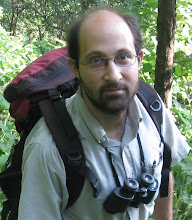
I've been putting together some plans, and people have started asking about them, so I thought it was time to publish them. As the title implies, I'm going to be moving around alot over the next 6-8 months. This is not really a change: I've already been moving around alot. What is a change is that it seems I will be less in rural India and more in the US.
Brief Summary: in India until 23rd March, in Bloomington from 24th-29th March, in Boston 29-30th, meditation retreat from 30th March-10th April, at parents' house in Amherst from 10th April-23rd April, in NYC on 23-24th, back to Bloomington on 24th night. In Bloomington for May and June (probably going to a conference in Madison in early June), back in India in July/August, back in Bloomington for 2011-12 academic year. Probable trip to California to attend a wedding at some point.
See below for the details:
Right now: I'm in Nagpur, at the office of Shodh, one of the main organizations that has been helping me with my research. One of the reasons I am here is I had stored a large number of books and files here, which had to be shipped back to the US. This was a rather entertaining experience, which you can read about here (this is a link to a website for Indian travellers and expats living in India - I thought my information would be useful to them).
On Monday night, the 14th of February, my research assistant and I are taking an overnight train to Khammam - a city in Andhra Pradesh. I will be studying a forest division in Khammam District as the 8th and final division in my dissertation. I expect to be in Khammam approximately 3 weeks, after which I will return to Hyderabad - on approximately March 7th. There is a chance of a short diversion to re-visit some friends I made while doing fieldwork in Adilabad, but no promises at this point.
In Hyderabad, I have a bunch of follow-up interviews to do with some senior policy-makers, and a few NGO type people I still need to meet. I also have more books that need to be shipped from there.
I leave Hyderabad on the night of the 17th of March - on an overnight train to Nagpur, where I will spend the Holi holiday with the friends I've made in my stay here.
On the night of March 20th, I take yet another overnight train to Delhi. I will be in Delhi for just 2 nights and 3 days. I have some final wrap-up kinds of work to do before I return to the US, and some friends to visit.
I'm flying out of Delhi on the night of the 23rd - my plane leaves after midnight so technically speaking, it is the 24th. I'm flying non-stop to Chicago, and then connecting to Indianapolis, where I arrive at 10 AM on the morning of Thursday the 24th of March. If anyone is interested, I would be really excited about getting a ride back from the airport, and will most likely need some help doing things like reconnecting the phone and internet in my house, getting some food (I no longer own a car), and readjusting to life in America.
Some people have been asking me if my return at the end of March means I've finished my fieldwork sooner than expected. I think when I left the US in May, I was telling people that I would be coming back between March and August, but I was never very sure how long fieldwork would take. Fieldwork has gone well, and I was able to meet with members of my research committee in January when they came to Hyderabad for a conference. At that time I explained to them what work I had accomplished, and what remains. There is always more work that *could* be done, but they advised me that the work I was planning to complete by the end of March would be sufficient.
There is more follow-up work I will have to do, but there are a few reasons why I think this work would be better accomplished on a follow up visit during July/August than by staying on in April and May. The primary reason is that April and May is summer in my study region, and summer in central India is notoriously hot - temperatures regularly top 120 F, and rarely drop below 90 F, even at night. My Indian friends tell me that it is impossible to work effectively in this heat. I'm from New England, and I think it is hot here in winter when everyone else is shivering and complaining of the cold. I'm not confident I'd make it when it is 120 degrees every day. I find the rainy season in central India - July and August - to be really quite pleasant - warm and wet, but not too hot, nor too wet. So I'll be much more capable of completing the necessary work in the rains than during the heat. A second reason is that I want to take the time to organize my notes, review what I've learned, and start some writing, and then come back and have an opportunity to present some preliminary results and ask questions about the missing pieces. A third reason is that my research visa expires on the 25th of March. While it appears that it isn't impossible to renew, it does sound like a big hassle, and thus, it seems to make more sense to go back to the US before the expiration, and get a new visa for my next trip.
I think that readjusting to life in the US will be difficult, but there are actually 2 adjustments. One, which I've done a couple times now, is the adjustment from India to the US - which are obviously extremely different cultures and societies. The second adjustment is from the life of a wandering field research to the life of a stationary writer. To be honest, I think I need to get away from the subject for a little while before I can sit down and start writing and organizing. For this reason, I've decided to take a break from research and go on a 10-day Vipassana Retreat, at the Vipassana Meditation Center in Shelburne Falls, MA. (For those who want to know more about why I do this, perhaps this excerpt of an essay by my father will help clarify). On the way there, I will be stopping in Boston to visit my college housemate David & his family on the 29th of March. David is a PhD student in Anthropology at Harvard, and lives somewhere in the Cambridge area, so if you are around there and want to try to meet up, let me know. The actual meditation course runs from the 30th March until the 10th of April.
After the meditation course I'm going to spend a couple weeks with my parents - probably mostly in Amherst, but maybe also in Guilford. My parents' house was affected by a major natural disaster last spring: some kind of a microburst knocked down every tree on their property. The beautiful old maple tree that shaded the south side of the house collapsed onto the garage (thankfully it didn't collapse on the house!), and the result is a landscaping nightmare... and damages estimated around $50,000. I think my parents could use some strong hands to help move some dirt around and plant some new trees, and I know I could use the discipline of some heavy physical labor. If you're around Western MA in mid April and want to hang out, I might try to rope you into helping out.
I plan to return to Bloomington on April 24th, stopping the night of the 23rd to visit another college friend, Jenny, in Manhattan. If you're in NYC and want to meet up, let me know.
The plan is to stay in Bloomington all of May and June, and write. There is also a garden to tend, of course, and I've volunteered to open my garden to visitors as an educational practice on Thursdays in May from 4-6 pm, in association with the Bloomington Free Skool's spring classes. I'm also planning to attend the International Symposium on Society and Resource Management in Madison, Wisc on June 4-8.
At some point in July and August I will be back in India. At a minimum, I will be presenting preliminary results to known audiences in Hyderabad, Nagpur, and Delhi. There are possibilities elsewhere, and I am likely to revisit friends I've made in a couple of my field sites. The duration of the trip is very much up in the air, as are the full countours - there has been talk, for example, of a trip up into the Himalayas, which I'm still open to, but I think I've decided it is not a priority. I'd like to go visit Sean who will be at Dhammagiri again (even though I know it is very wet there in the rainy season), and I might try to sit another 10-day course there or at the lovely center in Nagpur, or maybe even in Hyderabad or at Nagarjuna Sagar, if I can find the time.
Some of this depends on weddings. There are rumors of weddings being planned in California. It has been a long time... but there is at least one I've heard about that I really am going to try not to miss. If I can make it to the West Coast, there are many folks I'd like to visit. Timings, though, are yet to be announced.
I'm planning on being in Bloomington for the entire 2011-12 academic year. I've got 1 year of fellowship support remaining, and my aim is to complete my dissertation during this year. Since this is the last year that I've got a guaranteed fellowship (I had 5 years so I can't complain), I will also be looking for a new situation. If you've got any ideas, do keep me informed.
Summer & fall 2012, and beyond: Error: File 404 not found.
Showing posts with label travel. Show all posts
Showing posts with label travel. Show all posts
Saturday, February 12, 2011

Thursday, December 30, 2010
Fieldwork
In the early morning, I am riding down a narrow dirt road running through farm fields in an old Forest Department jeep, without seatbelts, shocks, or a proper door. Because I am an honored guest, I am sitting in front, next to the driver, a backpack with a notebook, camera, and water bottle crushed between my legs and the front of the vehicle (so it doesn't bounce out). On the benches in the rear of the jeep sit two forest officers - first is an older man who has spent his entire career with the department, at the lowest rank of the administrative hierarchy. Although he might be in his mid-50s, he looks strong and lean, as if he had spent a career outdoors. He stays alone in a small town here, at the edge of the area of forest he is responsible for. In our brief discussion in the early morning, I did not find out if he, like many such officials, keeps his family in some larger town in the region, seeing them only on weekends and holidays. The younger officer is a recent college graduate. He has entered the ranks of the service a step higher than the older man, and for the last year, he has been the man's boss. He has a wife and 2 little girls, who live with his parents in a town about 160 km away - a four hour journey by bus or motorcycle. Because of his education, he speaks some English. The driver is 20 years old, and tells me that he recently completed his 10th grade exam. He is from a village not far from here, and has been working as a driver since he was 14. He complains to me in Hindi that he has been hired only as a private driver on a contract basis, and thus gets paid only a quarter of what a regularly employed government driver would receive.
 Out of the mist appears a caravan of 12 bullock carts. Men drive, or sit huddled on the back on a pile of rice straw, wrapped in shawls to keep out the morning chill (to a New Englander, it does not seem cold, but still, the temperature is only about 60 degrees on this late December morning, and the rest of their clothing, lightweight cotton, is designed more for the blistering hot summer than for the chill of winter). The jeep halts, and the officers hop out to discuss with the drivers: Where are they going? To the forest... to collect firewood. The officers remind them that they should only collect dead wood, and not fell any living trees, and we drive on.
 At the edge of the forest, we find the remains of an attempted encroachment. Farmers from the local villages are desperate for land. There is a strong correlation between the presence of forests and the existence of severe poverty in India. Is this a causal connection? It is hard to say, since local conditions are so variable. But the landless poor - and those who have a little, but not enough land, often look to the degraded forest at the edge of their village as a source of new farmland.
This is not a new phenomena: for centuries, Indian governments encouraged the clearing of forest land for agriculture. Agricultural land could be taxed, increasing the treasury. Forests were a source of wild beasts: tigers and leopards ate people, while elephants, boars, bears, and troops of monkeys destroyed crops. Forests also provide a refuge for bandits and rebels. From what we can make out about the shape of forests prior to the British empire (which brought much more systematic record-keeping), the forests contracted when peace and economic growth encouraged the growth of agriculture, and expanded again when war and economic collapse wreaked havoc on the agrarian economy. As recently as the 1960s, the Government of India was still eager to give away forest land to farmers as part of its efforts to free India from dependence on imported food grains. This has changed, and the new emphasis is on forest conservation.
 These farmers have built a watchtower in their field of Jowar (sorghum - one of the grains traditionally cultivated and eaten in the semi-arid rainfed agriculture of central India). At night they will sleep their, keeping watch for boars and other wildlife who may come from the forest to forage on their crops.
Who cut the trees in the picture above? It is possible that they were cut by villagers eager for farmland, but it is equally possible that they were cut by organized groups of timber harvesters. This particular area was severely affected by India's Maoist rebellion for about 20 years - ending a few years ago when police pressure pushed the "Naxalites" across the border into a neighboring state. The Maoists, I am told, encouraged encroachments and logging, and beat and killed those forest officers who opposed them. Forest officers are also not always innocent in such works. These forests are in the central Indian teak belt, where a single good-sized teak tree can fetch upwards of $1000 in the markets. With this kind of money, smugglers can afford some bribes.
I haven't written much about my work in this blog. In fact, it is somewhat of a struggle to maintain the blog. Although I have a cellular modem, internet speeds in many of these places are too slow for uploading pictures, and the work schedule keeps me busy. Most days I'm out in the field, with the forest officers, observing their work, or interviewing NGOs, villagers, and other government officials who interact with the forests. I travel almost constantly. After a long day in the field, I come home and type up fieldnotes, recording my experiences of the day so that I can draw on them when I write up my research, and labelling my photos. I'm averaging over 5000 words/day. Sometimes, riding the bus, or meditating in the morning, my mind catches hold of an idea, and I start composing an essay on what I am learning. I try to put these in my fieldnotes, and imagine putting them out in the world. But in the constant dialogue between theories and evidence called fieldwork, I am constantly rebuilding my ideas, challenging them, or confronting new circumstances. My findings are preliminary. What kinds of preliminary thoughts and findings can I write about on a public blog? These thoughts and findings are meant to be the subject of research papers and books, eventually, and I'm erring for the moment on the side of saving them for more polished works. In the meantime, I'm trying to share with you - my friends who read my blog - some of what it looks and feels like here.
As everywhere in the world, forests are protected primarily by their remoteness.
 Sometimes I spend hours riding on incredibly overcrowded, rickety State Transport busses to reach my destination. The major roads are 1 lane wide, paved, with dirt shoulders, so on those occasions where we pass another large vehicle - a bullock cart making its way from the village to a farmers' field, a truck carrying cotton to market, or a car carrying a government official to inspect a new road - we swerve off onto the shoulder, and the bus seems to hang perilously over the roadside ditch. Then the great diesel engines fire, and we are up again, on the cracked and broken tarmac. We stop in a small town, and a crowd of 50 villagers push and shove to get on the bus to return from the market, while another crowd of 50, already on the bus, push and shove to get out.
 Village squares are decorated with statues of heroes, and you learn something about the village from the statues. Ambedkar, the great leader of India's Dalits (or untouchables) and the author of India's constitution, is almost everywhere - a short fat man, one arm outstretched, the other holding the constitution. Ambedkar converted to Buddhism at the end of his life, and his statues are often adorned with Buddhist imagery. In the wealthier upper-class towns, you often see statues of more recent political leaders - such as Andhra Pradesh's YSR Reddy, the popular chief minister who died in a helicopter crash a year ago. In the forest areas, you sometimes run into more obscure heroes. This man is Kumram Bhim - a leader of the Gond tribe who organized his people against the Nizam of Hyderabad to demand rights to "Jell, Jungle, Jamin" (land, forest, water). He was killed in 1940, but his memory lives on. I'm told that in the more remote villages, you can also find statues of the Austrian anthropologist, Haimendorf, who was sent by the Nizam in the 1940s to study the conditions of life among the Gonds, and try to improve their situation.
A friend I have made through my research, an activist with a deep commitment to working for the poor and downtrodden, told me that every place in India has its own indigenous history of resistance, political protest, and the creation of alternatives. In some places, I see the footsteps of Gandhi and his followers, who taught non-violent civil disobedience and village development. Gandhi's organizing principle was "Swaraj" or self-rule. Modern nationalism interprets this to mean freedom from the British, but if you read Gandhi's work (Gandhi published a newspaper for much of his adult life - his collected works run to over 90 volumes), you find a more complicated view of swaraj, which emphasizes self-government, as well as personal growth and development. In other places I see the footsteps of violent suppression of the downtrodden, as well as violent revolts by peasants and forest dwellers demanding rights, land, and lower taxes.
 In the era of forest conservation, how can the forest land near villages be "conserved," when the villagers depend on the forest for their firewood, the timbers to build their wall frames and roofs, the bamboo to build their walls, the poles to grow their beans on, the thorny bushes to fence the goats out of their fields, the wood to build their carts and tools, and perhaps most importantly, the fodder to feed their domestic animals (who in turn, provide them with manure to fertilize their fields?). This has been a major struggle of the last few decades of forestry in India, and it is by no means certain that adequate solutions have been found to address the problem. Perhaps, some think, if the villagers had more means of livelihood, and earned some money from the intact forest, they would more carefully regulate their own use, and also serve as a bulwark against the organized timber smugglers. In the picture above, the tribal department has provided the villagers with eggs of silkworms, and the forest department has made an arrangement to allow a group of villagers to grow silk worms on the Terminalia tomentosa trees in the forest surrounding the village. The silkworms are thick and fat, reminding me of the I used to pull off tomato plants in Maine.
 By stereotype, the villagers living near forests are "tribals" or "adivasis" - people who claim to be indigenous to India, and to have long historical relations with the forest. The reality is often more complicated. This lovely village was settled by Hindu refugees from East Pakistan (now Bangladesh) in the 1960s.
 Unlike the pattern typical of villages in the region, where houses are densely packed together in a small settlement, surrounded by large agricultural fields, the Bengalis plant trees and extensive vegetable gardens around their homes. Approaching this village, I thought I was driving into a forest, but instead found myself in a village shaded by tamarind, banana, neem, banana and drumstick trees. I suppose I could learn from these people that climate is not completely deterministic - I had imagined that the lack of trees was due to the arid climate, but the Bengalis showed me that the lack of trees was due to a cultural conception of what a village is.
Incidentally, one of the amazing things about India is its linguistic diversity. The Bengali refugees are poor and uneducated, but every one I met spoke at least 3 languages - their mother tongue, Bengali, the language of the state they now live in, Telugu, and Hindi, the national language.
 I have already mentioned Jowar - one of the many varieties of millets grown in central India. In my experience, they are all rich, flavorful, and nutritious foods, but they are suffering a fate similar to the scorn that European derived cooks once felt for peasant foods like rutabagas, turnips, and parsnips. I am told that people would be ashamed to serve a guest - especially an honored guest like me, a foreigner, such lowly foods. I am stuck eating decent, but somewhat bland and boring white rice. Jowar is also grown - as in this picture from my research assistant's family's farm - as a fodder crop, mixed in with various legumes.
 Ripe jowar stalks, ready for harvest.
 Perhaps the most widely planted crop in the arid lands of central India is a remarkable legume called Toor or arhar dal in Hindi (English names include red gram and pigeon pea). A native plant to India, toor seems to have the ability to thrive in the driest and least nutritional soils, producing abundant protein rich seed, used to make dal - including the famous sambar of South India.
 Toor in bloom. Toor is widely interplanted with cotton, the region's primary cash crop. Of course cotton is grown widely in the US, but not in places I had visited previously, so I find myself fascinated by the amazing tufts of fiber this plant produces.
 Cotton being brought to market in a village's weekly market day:

Once the cotton is sold, the villagers have cash to buy clothes, spices, plastic sandals, and vegetables. Strangely, the vegetables come from traders who go to the city to buy them - farmers markets as we know them in the US are rarely found in India, and the ladies selling their vegetable wares in this market are traders, not farmers (this has always struck me as an opening for a different kind of business opportunity for the rural farmers). Eggplant is one of the few native vegetables of South Asia to spread widely outside. The eggplants are very diverse, and some are remarkably beautiful.
 These are Jujubes, a fruit that grows wild on the margins of fields and villages, as well as in cultivated orchards. They taste somewhat like plums.
 Crossing the Pranahita River on a ferry boat:
 My essay so far might give off the misimpression that forests are used only by villagers. Forests are also used by industries. Teak is native to central India, and central Indian teak is still considered to be of the best quality (although I've learned that many Indian furniture makers have turned to teak grown on plantations in west Africa and Malaysia, due to domestic shortages and high prices). Bamboo is also used for paper making, as at this giant factory:
 The man with the hard hat is my research assistant's brother, who works in a junior engineering position in the Sirpur Paper Mills in the town of Kaghaznagar (translation: paper town). Kaghaznagar is a stop on the main railway line, where you cover your nose to avoid breathing in the belching sulfurous plumes. The town itself is a mixture of orderly quarters occupied by the thousands of company employees, and rickety slums where the rest of the towns' residents live. You can walk from the mill to the bus stand at the far end of town in about 20 minutes.
 My research assistant, shown here with one of his nephews, grew up in a small village about 5 km as the crow flies from Kaghaznagar. During the dry season, you can wade across the river, and reach the town relatively quickly, but during the rainy season, it is necessary to detour about 15 km around to reach the main road.
I have been reading Anirudh Krishna's fantastic new book, "One Illness Away: Why People Become Poor and How They Escape Poverty." Krishna did some of his field research in Andhra Pradesh, in a district near to where my assistant grew up, and found that few people in such rural villages aspire to, or attain, anything beyond the lowest levels of employment outside of their village. People may become village school teachers, or police constables, but few become high level professionals. Ramdas, my assistant, seems to be an exception to this pattern - he is currently studying for his MPhil in economics at a reputed institute in Hyderabad, and hopes to do a PhD studying sustainable agriculture.
 Ramdas and 2 sisters-in-law shelling beans.
 Although Ramdas' family belongs to one of the Scheduled Castes (the modern government term for the former "untouchables" or dalits), they are descended from the first settlers of this village, who arrived here 70 or 80 years ago. His grandfather owned over 40 acres of land, and was quite wealthy by local standards, but they sold alot of land to pay for medical care for his grandmother (Krishna finds that healthcare related expenses are one of the primary reasons that families fall into poverty - hence the title of his book - One Illness Away). They are fortunate, in that they still own 17 acres, making them still one of the wealthiest families in the village. Ramdas is the youngest of 5, and his eldest brother, the one who works in the paper mill, encouraged him to pursue higher study. Few other people from his village have achieved as high levels of education as he has.
 Of course, this does not mean that they lack talent. More, it would seem that they lack opportunities and information about how to pursue them. Consider the young friend of Ramdas who painted these pictures of the Buddha and Ambedkar on the walls of his home. He has quite a talent for painting, and I've seen similar paintings for sale for 1000s of rupees outside of the Jehangir Art Gallery in Mumbai. But how is a poor boy from Central India to reach those heights?
 Ramdas' sister-in-law embroidering her sari.
 The women of the family gathered in the courtyard in the evening.
One would like to think that in the future talented people from these villages would have the opportunity to make a better and more secure living, and to be free from the pressing wants of real material poverty. Not only their lives, but that of the rest of the world, will improve when their talents are able to reach full potential. On the other hand, it seems to me from my glimpses of life in these homes, that there are aspects of their lives that ought not to be lost. Children grow up surrounded by loving family. Neighbors respect each other, and people live lives that are orderly and predictable. They are embedded within a rich culture, one that is not merely "traditional" but also reinventing itself in response to a modern time with television sets, the spread of Buddhism among the scheduled castes of the region, etc. They eat healthy homegrown organic meals, and work hard with their hands. It is not that poverty is beautiful, but rather that in escaping poverty, I would hope that they will not lose sight of the things of value in the communities in which they came from. There is nothing perfect about the lives of the wealthy - be it in Hyderabad or in Bloomington, so perhaps our lives can also be enriched by what people who come from these villages have to teach us.
 A couple of very hyperactive nephews.
 A Bengali family returning from their fields by bullock-cart at dusk.
 Out of the mist appears a caravan of 12 bullock carts. Men drive, or sit huddled on the back on a pile of rice straw, wrapped in shawls to keep out the morning chill (to a New Englander, it does not seem cold, but still, the temperature is only about 60 degrees on this late December morning, and the rest of their clothing, lightweight cotton, is designed more for the blistering hot summer than for the chill of winter). The jeep halts, and the officers hop out to discuss with the drivers: Where are they going? To the forest... to collect firewood. The officers remind them that they should only collect dead wood, and not fell any living trees, and we drive on.
 At the edge of the forest, we find the remains of an attempted encroachment. Farmers from the local villages are desperate for land. There is a strong correlation between the presence of forests and the existence of severe poverty in India. Is this a causal connection? It is hard to say, since local conditions are so variable. But the landless poor - and those who have a little, but not enough land, often look to the degraded forest at the edge of their village as a source of new farmland.
This is not a new phenomena: for centuries, Indian governments encouraged the clearing of forest land for agriculture. Agricultural land could be taxed, increasing the treasury. Forests were a source of wild beasts: tigers and leopards ate people, while elephants, boars, bears, and troops of monkeys destroyed crops. Forests also provide a refuge for bandits and rebels. From what we can make out about the shape of forests prior to the British empire (which brought much more systematic record-keeping), the forests contracted when peace and economic growth encouraged the growth of agriculture, and expanded again when war and economic collapse wreaked havoc on the agrarian economy. As recently as the 1960s, the Government of India was still eager to give away forest land to farmers as part of its efforts to free India from dependence on imported food grains. This has changed, and the new emphasis is on forest conservation.
 These farmers have built a watchtower in their field of Jowar (sorghum - one of the grains traditionally cultivated and eaten in the semi-arid rainfed agriculture of central India). At night they will sleep their, keeping watch for boars and other wildlife who may come from the forest to forage on their crops.
Who cut the trees in the picture above? It is possible that they were cut by villagers eager for farmland, but it is equally possible that they were cut by organized groups of timber harvesters. This particular area was severely affected by India's Maoist rebellion for about 20 years - ending a few years ago when police pressure pushed the "Naxalites" across the border into a neighboring state. The Maoists, I am told, encouraged encroachments and logging, and beat and killed those forest officers who opposed them. Forest officers are also not always innocent in such works. These forests are in the central Indian teak belt, where a single good-sized teak tree can fetch upwards of $1000 in the markets. With this kind of money, smugglers can afford some bribes.
I haven't written much about my work in this blog. In fact, it is somewhat of a struggle to maintain the blog. Although I have a cellular modem, internet speeds in many of these places are too slow for uploading pictures, and the work schedule keeps me busy. Most days I'm out in the field, with the forest officers, observing their work, or interviewing NGOs, villagers, and other government officials who interact with the forests. I travel almost constantly. After a long day in the field, I come home and type up fieldnotes, recording my experiences of the day so that I can draw on them when I write up my research, and labelling my photos. I'm averaging over 5000 words/day. Sometimes, riding the bus, or meditating in the morning, my mind catches hold of an idea, and I start composing an essay on what I am learning. I try to put these in my fieldnotes, and imagine putting them out in the world. But in the constant dialogue between theories and evidence called fieldwork, I am constantly rebuilding my ideas, challenging them, or confronting new circumstances. My findings are preliminary. What kinds of preliminary thoughts and findings can I write about on a public blog? These thoughts and findings are meant to be the subject of research papers and books, eventually, and I'm erring for the moment on the side of saving them for more polished works. In the meantime, I'm trying to share with you - my friends who read my blog - some of what it looks and feels like here.
As everywhere in the world, forests are protected primarily by their remoteness.
 Sometimes I spend hours riding on incredibly overcrowded, rickety State Transport busses to reach my destination. The major roads are 1 lane wide, paved, with dirt shoulders, so on those occasions where we pass another large vehicle - a bullock cart making its way from the village to a farmers' field, a truck carrying cotton to market, or a car carrying a government official to inspect a new road - we swerve off onto the shoulder, and the bus seems to hang perilously over the roadside ditch. Then the great diesel engines fire, and we are up again, on the cracked and broken tarmac. We stop in a small town, and a crowd of 50 villagers push and shove to get on the bus to return from the market, while another crowd of 50, already on the bus, push and shove to get out.
 Village squares are decorated with statues of heroes, and you learn something about the village from the statues. Ambedkar, the great leader of India's Dalits (or untouchables) and the author of India's constitution, is almost everywhere - a short fat man, one arm outstretched, the other holding the constitution. Ambedkar converted to Buddhism at the end of his life, and his statues are often adorned with Buddhist imagery. In the wealthier upper-class towns, you often see statues of more recent political leaders - such as Andhra Pradesh's YSR Reddy, the popular chief minister who died in a helicopter crash a year ago. In the forest areas, you sometimes run into more obscure heroes. This man is Kumram Bhim - a leader of the Gond tribe who organized his people against the Nizam of Hyderabad to demand rights to "Jell, Jungle, Jamin" (land, forest, water). He was killed in 1940, but his memory lives on. I'm told that in the more remote villages, you can also find statues of the Austrian anthropologist, Haimendorf, who was sent by the Nizam in the 1940s to study the conditions of life among the Gonds, and try to improve their situation.
A friend I have made through my research, an activist with a deep commitment to working for the poor and downtrodden, told me that every place in India has its own indigenous history of resistance, political protest, and the creation of alternatives. In some places, I see the footsteps of Gandhi and his followers, who taught non-violent civil disobedience and village development. Gandhi's organizing principle was "Swaraj" or self-rule. Modern nationalism interprets this to mean freedom from the British, but if you read Gandhi's work (Gandhi published a newspaper for much of his adult life - his collected works run to over 90 volumes), you find a more complicated view of swaraj, which emphasizes self-government, as well as personal growth and development. In other places I see the footsteps of violent suppression of the downtrodden, as well as violent revolts by peasants and forest dwellers demanding rights, land, and lower taxes.
 In the era of forest conservation, how can the forest land near villages be "conserved," when the villagers depend on the forest for their firewood, the timbers to build their wall frames and roofs, the bamboo to build their walls, the poles to grow their beans on, the thorny bushes to fence the goats out of their fields, the wood to build their carts and tools, and perhaps most importantly, the fodder to feed their domestic animals (who in turn, provide them with manure to fertilize their fields?). This has been a major struggle of the last few decades of forestry in India, and it is by no means certain that adequate solutions have been found to address the problem. Perhaps, some think, if the villagers had more means of livelihood, and earned some money from the intact forest, they would more carefully regulate their own use, and also serve as a bulwark against the organized timber smugglers. In the picture above, the tribal department has provided the villagers with eggs of silkworms, and the forest department has made an arrangement to allow a group of villagers to grow silk worms on the Terminalia tomentosa trees in the forest surrounding the village. The silkworms are thick and fat, reminding me of the I used to pull off tomato plants in Maine.
 By stereotype, the villagers living near forests are "tribals" or "adivasis" - people who claim to be indigenous to India, and to have long historical relations with the forest. The reality is often more complicated. This lovely village was settled by Hindu refugees from East Pakistan (now Bangladesh) in the 1960s.
 Unlike the pattern typical of villages in the region, where houses are densely packed together in a small settlement, surrounded by large agricultural fields, the Bengalis plant trees and extensive vegetable gardens around their homes. Approaching this village, I thought I was driving into a forest, but instead found myself in a village shaded by tamarind, banana, neem, banana and drumstick trees. I suppose I could learn from these people that climate is not completely deterministic - I had imagined that the lack of trees was due to the arid climate, but the Bengalis showed me that the lack of trees was due to a cultural conception of what a village is.
Incidentally, one of the amazing things about India is its linguistic diversity. The Bengali refugees are poor and uneducated, but every one I met spoke at least 3 languages - their mother tongue, Bengali, the language of the state they now live in, Telugu, and Hindi, the national language.
 I have already mentioned Jowar - one of the many varieties of millets grown in central India. In my experience, they are all rich, flavorful, and nutritious foods, but they are suffering a fate similar to the scorn that European derived cooks once felt for peasant foods like rutabagas, turnips, and parsnips. I am told that people would be ashamed to serve a guest - especially an honored guest like me, a foreigner, such lowly foods. I am stuck eating decent, but somewhat bland and boring white rice. Jowar is also grown - as in this picture from my research assistant's family's farm - as a fodder crop, mixed in with various legumes.
 Ripe jowar stalks, ready for harvest.
 Perhaps the most widely planted crop in the arid lands of central India is a remarkable legume called Toor or arhar dal in Hindi (English names include red gram and pigeon pea). A native plant to India, toor seems to have the ability to thrive in the driest and least nutritional soils, producing abundant protein rich seed, used to make dal - including the famous sambar of South India.
 Toor in bloom. Toor is widely interplanted with cotton, the region's primary cash crop. Of course cotton is grown widely in the US, but not in places I had visited previously, so I find myself fascinated by the amazing tufts of fiber this plant produces.
 Cotton being brought to market in a village's weekly market day:

Once the cotton is sold, the villagers have cash to buy clothes, spices, plastic sandals, and vegetables. Strangely, the vegetables come from traders who go to the city to buy them - farmers markets as we know them in the US are rarely found in India, and the ladies selling their vegetable wares in this market are traders, not farmers (this has always struck me as an opening for a different kind of business opportunity for the rural farmers).
 Eggplant is one of the few native vegetables of South Asia to spread widely outside. The eggplants are very diverse, and some are remarkably beautiful.
 These are Jujubes, a fruit that grows wild on the margins of fields and villages, as well as in cultivated orchards. They taste somewhat like plums.
 Crossing the Pranahita River on a ferry boat:
 My essay so far might give off the misimpression that forests are used only by villagers. Forests are also used by industries. Teak is native to central India, and central Indian teak is still considered to be of the best quality (although I've learned that many Indian furniture makers have turned to teak grown on plantations in west Africa and Malaysia, due to domestic shortages and high prices). Bamboo is also used for paper making, as at this giant factory:
 The man with the hard hat is my research assistant's brother, who works in a junior engineering position in the Sirpur Paper Mills in the town of Kaghaznagar (translation: paper town). Kaghaznagar is a stop on the main railway line, where you cover your nose to avoid breathing in the belching sulfurous plumes. The town itself is a mixture of orderly quarters occupied by the thousands of company employees, and rickety slums where the rest of the towns' residents live. You can walk from the mill to the bus stand at the far end of town in about 20 minutes.
 My research assistant, shown here with one of his nephews, grew up in a small village about 5 km as the crow flies from Kaghaznagar. During the dry season, you can wade across the river, and reach the town relatively quickly, but during the rainy season, it is necessary to detour about 15 km around to reach the main road.
I have been reading Anirudh Krishna's fantastic new book, "One Illness Away: Why People Become Poor and How They Escape Poverty." Krishna did some of his field research in Andhra Pradesh, in a district near to where my assistant grew up, and found that few people in such rural villages aspire to, or attain, anything beyond the lowest levels of employment outside of their village. People may become village school teachers, or police constables, but few become high level professionals. Ramdas, my assistant, seems to be an exception to this pattern - he is currently studying for his MPhil in economics at a reputed institute in Hyderabad, and hopes to do a PhD studying sustainable agriculture.
 Ramdas and 2 sisters-in-law shelling beans.
 Although Ramdas' family belongs to one of the Scheduled Castes (the modern government term for the former "untouchables" or dalits), they are descended from the first settlers of this village, who arrived here 70 or 80 years ago. His grandfather owned over 40 acres of land, and was quite wealthy by local standards, but they sold alot of land to pay for medical care for his grandmother (Krishna finds that healthcare related expenses are one of the primary reasons that families fall into poverty - hence the title of his book - One Illness Away). They are fortunate, in that they still own 17 acres, making them still one of the wealthiest families in the village. Ramdas is the youngest of 5, and his eldest brother, the one who works in the paper mill, encouraged him to pursue higher study. Few other people from his village have achieved as high levels of education as he has.
 Of course, this does not mean that they lack talent. More, it would seem that they lack opportunities and information about how to pursue them. Consider the young friend of Ramdas who painted these pictures of the Buddha and Ambedkar on the walls of his home. He has quite a talent for painting, and I've seen similar paintings for sale for 1000s of rupees outside of the Jehangir Art Gallery in Mumbai. But how is a poor boy from Central India to reach those heights?
 Ramdas' sister-in-law embroidering her sari.
 The women of the family gathered in the courtyard in the evening.
One would like to think that in the future talented people from these villages would have the opportunity to make a better and more secure living, and to be free from the pressing wants of real material poverty. Not only their lives, but that of the rest of the world, will improve when their talents are able to reach full potential. On the other hand, it seems to me from my glimpses of life in these homes, that there are aspects of their lives that ought not to be lost. Children grow up surrounded by loving family. Neighbors respect each other, and people live lives that are orderly and predictable. They are embedded within a rich culture, one that is not merely "traditional" but also reinventing itself in response to a modern time with television sets, the spread of Buddhism among the scheduled castes of the region, etc. They eat healthy homegrown organic meals, and work hard with their hands. It is not that poverty is beautiful, but rather that in escaping poverty, I would hope that they will not lose sight of the things of value in the communities in which they came from. There is nothing perfect about the lives of the wealthy - be it in Hyderabad or in Bloomington, so perhaps our lives can also be enriched by what people who come from these villages have to teach us.
 A couple of very hyperactive nephews.
 A Bengali family returning from their fields by bullock-cart at dusk.
Wednesday, November 24, 2010
Giving Thanks
In the last few months I've celebrated many Indian holidays that I had never experienced before. Although I've enjoyed all of the celebrations, I find that I do not really understand their rhythm. As they are new to me, I have no experience of anticipation of what is to come, and holidays bring no nostalgia for times past. It is a very different way to experience a holiday.
Today the tables are turned - since it is one of my favorite holidays in the US, but I am alone in a new city (as has so frequently been the case in the course of this research) where I have few friends, and don't know a single other American. It is just another regular working day here. I feel a sense of nostalgia for Thanksgivings gone by - but don't really have anyone to share it with. I remember a couple of years ago I went for a long bicycle ride on Thanksgiving afternoon, before dinner. I was struck with the pattern - everyone was already at their Thanksgiving destination, and the roads were very quiet. Out in the country it was striking to see most houses empty - and every fifth or sixth house packed with people.
When I was a teenager, my Thanksgivings began with helping my mother cook on Wednesday afternoon, after we both came home from school. I did not cook much growing up, and it was helping mom cook these special holiday meals that taught me the rudiments of cookery. We would often listen to my parents' old record collection - Joni Mitchell, Carole King, Judy Collins, and of course, The Beatles. Then Thursday morning we would pack our bags and leave early for our little post and beam cabin in the glacially scoured schist hills of Southern Vermont, so that we could light a fire and warm the place before our guests arrived. Being from a small and scattered family, we rarely shared Thanksgiving with relatives, but with other friends whose families were equally small and scattered. They would join us in the afternoon, bringing plates of lasagna or vegetables to add to my mothers' pumpkin pie, corn pudding, tofu-spinach pie, and cranberry bread. For many years my guitar teacher and his family joined us, and after dinner we'd go for a walk up the hill to the old commune at Packers Corner (it was on such a Thanksgiving walk that I saw a goat, housed in a building that had once been the commune library in its more crowded days, chewing on a copy of the Odyssey). Then we would sing songs and play guitar around the woodstove, and eat our dessert.
For several years, we made it a tradition to climb Mount Greylock the day after Thanksgiving. Mount Greylock is the tallest mountain in Massachusetts, and while westerners may scoff at its height, it is still a massive chunk of rock, dominating over the valley of Williamstown and North Adams. The closest approach to our cabin was from the Appalachian Trail in N. Adams, and from there I recall the climb taking perhaps 3 or 4 hours. The Housatonic Valley, where the trail begins, is solidly in the temperate zone - dominated by maples and beeches, but as you climb, you enter a great boreal forest, dominated by spruce and fir. One year, as if to remind us of the difference between the warm valleys and the harsh summits of the Taconic Mountains, we arrived on the summit to find 3 feet of snow. Our trail was hard packed by previous visitors, and we were always prepared for the wind and cold, so we took it lightly, but it was impressive to see the difference with the valleys, where we had yet to see snow.
Like many well-known mountains, Mount Greylock has the misfortune of having a motorable road to the summit. I suppose if you climbed it in summer you might find it full of motorists, but we never saw any in late November. However, this particular year, we heard a car making its way up the snowbound road as we sat sipping our hot chocolate in a wind-free spot in the lee of a building. Although the road was not plowed, it had been packed tight by traffic from four-wheel drive vehicles, but still, we were surprised to see a station wagon appearing in the parking lot. Because the 4-wheel drive tracks spread out in the parking lot, the snow was less packed in the lot, and as the station wagon drove into the parking lot, it sank deep into the snow, and the wheels began to spin.
Out of the wagon poured a big extended family of Indians, taking advantage of their holiday to see some of the famous sights of the state. They were dressed as people in the city might dress for a cool day in the late fall - leather jackets, street shoes, cotton socks. The wind and snow howled around them, and they clung to each other for warmth. Being foreigners, they did not know that New England mountaintop in late November was a thing to be treated with respect, fear, and heavy down parkas. Things did not look good. Fortunately, there were a few other hikers on the mountaintop, and together we were able to push the car back to the safety of the beaten track.
Being here in India, I sometimes feel like that Indian family must have felt - dazzled by the beauty of the country I am visiting, but struggling to understand the customs, culture, ways of life, and dangers. So far, my car has not gotten stuck in any snow drifts. I have now been here for over six months, and every day I've relied on the kindness of strangers and friends to show me the way. I feel a deep sense of gratitude for all the help I've been given, as I've made my way through this challenging experience of living and conducting research in a foreign country. I also feel tremendous gratitude for all of those back home in the US whose support has helped make it possible for me to undertake this wonderful adventure. I hope you all have a warm Thanksgiving, and I look forward to sharing many more with you!
Last night, thinking of friends and family far away, I opened up my copy of "Selected Poems" of Rabindranath Tagore (Translated by William Radice) to a page with this poem:
Flute-Music
Kinu the milkman’s alley.
A ground-floor room in a two-storeyed house,
Slap on the road, windows barred.
Decaying walls, crumbling to dust in places
Or stained with damp.
Stuck on the door,
A picture of Ganesa, Bringer of Success,
From the end of a bale of cloth.
Another creature apart from me lives in my room
For the same rent:
A lizard.
There’s one difference between him and me:
He doesn’t go hungry.
I get twenty-five rupees a month
As junior clerk in a trading office.
I’m fed at the Dattas’ house
For coaching their boy.
At dusk I go to Sealdah station,
Spend the evening there
To save the cost of light.
Engines chuffing,
Whistles shrieking,
Passengers scurrying,
Coolies Shouting.
I stay till half past ten,
Then back to my dark, silent, lonely room.
A village on the Dhalesvari river, that’s where my aunt’s people live.
Her brother-in-law’s daughter –
She was due to marry my unfortunate self, everything was fixed.
The moment was indeed auspicious for her, no doubt of that –
For I ran away.
The girl was saved from me,
And I from her.
She did not come to this room, but she’s in and out of my mind all the time:
Daca sari, vermilion on her forehead.
Pouring rain.
My tram costs go up,
But often as not my pay gets cut for lateness.
Along the alley,
Mango skins and stones, jack-fruit pulp,
Fish-gills, dead kittens
And God knows what other rubbish
Pile up and rot.
My umbrella is like my depleted pay –
Full of holes.
My sopping office clothes ooze.
Like a pious Vaisnava.
Monsoon darkness
Sticks in my damp room
Like an animal caught in a trap,
Lifeless and numb.
Day and night I feel strapped bodily
On to a half-dead world.
At the corner of the alley lives Kantababu
Long hair carefully parted,
Large eyes,
Cultivated tastes.
He fancies himself on the cornet:
The sound of it comes in gusts
On the foul breeze of the alley –
Sometimes in the middle of the night,
Sometimes in the early morning twilight,
Sometimes in the afternoon
When sun and shadows glitter.
Suddenly this evening
He starts to play runs in Sindhu-Baroya Rag
And the whole sky rings
With eternal pangs of separation.
At one the alley is a lie,
False and vile as the ravings of a drunkard,
And I feel that nothing distinguishes Haripada the clerk
From the Emperor Akbar
Torn umbella and royal parasol merge,
Rise on the sad music of a flute
Towards one heaven.
The music is true
Where in the everlasting twilight-hour of my wedding,
The Dhalesvari river flows,
Its banks deeply shaded by tamal-trees,
And she who waits in the courtyard
Is dressed in a Dacca sari, vermillion on her forehead.
Finally, here are some pictures of the beautiful gardens at the Centre for Economic and Social Studies in Hyderabad, where I am staying this week:
 The building in the background here is some sort of old palace, now a school for mentally handicapped children.
 The rocks of Hyderabad are 2.5 billion year old gneiss.
 In front of the library.

The building in the background is the old observatory of the Nizam of Hyderabad - the telescope is long gone, but the preserved campus is now a lovely place for me to spend Thanksgiving.

Today the tables are turned - since it is one of my favorite holidays in the US, but I am alone in a new city (as has so frequently been the case in the course of this research) where I have few friends, and don't know a single other American. It is just another regular working day here. I feel a sense of nostalgia for Thanksgivings gone by - but don't really have anyone to share it with. I remember a couple of years ago I went for a long bicycle ride on Thanksgiving afternoon, before dinner. I was struck with the pattern - everyone was already at their Thanksgiving destination, and the roads were very quiet. Out in the country it was striking to see most houses empty - and every fifth or sixth house packed with people.
When I was a teenager, my Thanksgivings began with helping my mother cook on Wednesday afternoon, after we both came home from school. I did not cook much growing up, and it was helping mom cook these special holiday meals that taught me the rudiments of cookery. We would often listen to my parents' old record collection - Joni Mitchell, Carole King, Judy Collins, and of course, The Beatles. Then Thursday morning we would pack our bags and leave early for our little post and beam cabin in the glacially scoured schist hills of Southern Vermont, so that we could light a fire and warm the place before our guests arrived. Being from a small and scattered family, we rarely shared Thanksgiving with relatives, but with other friends whose families were equally small and scattered. They would join us in the afternoon, bringing plates of lasagna or vegetables to add to my mothers' pumpkin pie, corn pudding, tofu-spinach pie, and cranberry bread. For many years my guitar teacher and his family joined us, and after dinner we'd go for a walk up the hill to the old commune at Packers Corner (it was on such a Thanksgiving walk that I saw a goat, housed in a building that had once been the commune library in its more crowded days, chewing on a copy of the Odyssey). Then we would sing songs and play guitar around the woodstove, and eat our dessert.
For several years, we made it a tradition to climb Mount Greylock the day after Thanksgiving. Mount Greylock is the tallest mountain in Massachusetts, and while westerners may scoff at its height, it is still a massive chunk of rock, dominating over the valley of Williamstown and North Adams. The closest approach to our cabin was from the Appalachian Trail in N. Adams, and from there I recall the climb taking perhaps 3 or 4 hours. The Housatonic Valley, where the trail begins, is solidly in the temperate zone - dominated by maples and beeches, but as you climb, you enter a great boreal forest, dominated by spruce and fir. One year, as if to remind us of the difference between the warm valleys and the harsh summits of the Taconic Mountains, we arrived on the summit to find 3 feet of snow. Our trail was hard packed by previous visitors, and we were always prepared for the wind and cold, so we took it lightly, but it was impressive to see the difference with the valleys, where we had yet to see snow.
Like many well-known mountains, Mount Greylock has the misfortune of having a motorable road to the summit. I suppose if you climbed it in summer you might find it full of motorists, but we never saw any in late November. However, this particular year, we heard a car making its way up the snowbound road as we sat sipping our hot chocolate in a wind-free spot in the lee of a building. Although the road was not plowed, it had been packed tight by traffic from four-wheel drive vehicles, but still, we were surprised to see a station wagon appearing in the parking lot. Because the 4-wheel drive tracks spread out in the parking lot, the snow was less packed in the lot, and as the station wagon drove into the parking lot, it sank deep into the snow, and the wheels began to spin.
Out of the wagon poured a big extended family of Indians, taking advantage of their holiday to see some of the famous sights of the state. They were dressed as people in the city might dress for a cool day in the late fall - leather jackets, street shoes, cotton socks. The wind and snow howled around them, and they clung to each other for warmth. Being foreigners, they did not know that New England mountaintop in late November was a thing to be treated with respect, fear, and heavy down parkas. Things did not look good. Fortunately, there were a few other hikers on the mountaintop, and together we were able to push the car back to the safety of the beaten track.
Being here in India, I sometimes feel like that Indian family must have felt - dazzled by the beauty of the country I am visiting, but struggling to understand the customs, culture, ways of life, and dangers. So far, my car has not gotten stuck in any snow drifts. I have now been here for over six months, and every day I've relied on the kindness of strangers and friends to show me the way. I feel a deep sense of gratitude for all the help I've been given, as I've made my way through this challenging experience of living and conducting research in a foreign country. I also feel tremendous gratitude for all of those back home in the US whose support has helped make it possible for me to undertake this wonderful adventure. I hope you all have a warm Thanksgiving, and I look forward to sharing many more with you!
Last night, thinking of friends and family far away, I opened up my copy of "Selected Poems" of Rabindranath Tagore (Translated by William Radice) to a page with this poem:
Flute-Music
Kinu the milkman’s alley.
A ground-floor room in a two-storeyed house,
Slap on the road, windows barred.
Decaying walls, crumbling to dust in places
Or stained with damp.
Stuck on the door,
A picture of Ganesa, Bringer of Success,
From the end of a bale of cloth.
Another creature apart from me lives in my room
For the same rent:
A lizard.
There’s one difference between him and me:
He doesn’t go hungry.
I get twenty-five rupees a month
As junior clerk in a trading office.
I’m fed at the Dattas’ house
For coaching their boy.
At dusk I go to Sealdah station,
Spend the evening there
To save the cost of light.
Engines chuffing,
Whistles shrieking,
Passengers scurrying,
Coolies Shouting.
I stay till half past ten,
Then back to my dark, silent, lonely room.
A village on the Dhalesvari river, that’s where my aunt’s people live.
Her brother-in-law’s daughter –
She was due to marry my unfortunate self, everything was fixed.
The moment was indeed auspicious for her, no doubt of that –
For I ran away.
The girl was saved from me,
And I from her.
She did not come to this room, but she’s in and out of my mind all the time:
Daca sari, vermilion on her forehead.
Pouring rain.
My tram costs go up,
But often as not my pay gets cut for lateness.
Along the alley,
Mango skins and stones, jack-fruit pulp,
Fish-gills, dead kittens
And God knows what other rubbish
Pile up and rot.
My umbrella is like my depleted pay –
Full of holes.
My sopping office clothes ooze.
Like a pious Vaisnava.
Monsoon darkness
Sticks in my damp room
Like an animal caught in a trap,
Lifeless and numb.
Day and night I feel strapped bodily
On to a half-dead world.
At the corner of the alley lives Kantababu
Long hair carefully parted,
Large eyes,
Cultivated tastes.
He fancies himself on the cornet:
The sound of it comes in gusts
On the foul breeze of the alley –
Sometimes in the middle of the night,
Sometimes in the early morning twilight,
Sometimes in the afternoon
When sun and shadows glitter.
Suddenly this evening
He starts to play runs in Sindhu-Baroya Rag
And the whole sky rings
With eternal pangs of separation.
At one the alley is a lie,
False and vile as the ravings of a drunkard,
And I feel that nothing distinguishes Haripada the clerk
From the Emperor Akbar
Torn umbella and royal parasol merge,
Rise on the sad music of a flute
Towards one heaven.
The music is true
Where in the everlasting twilight-hour of my wedding,
The Dhalesvari river flows,
Its banks deeply shaded by tamal-trees,
And she who waits in the courtyard
Is dressed in a Dacca sari, vermillion on her forehead.
Finally, here are some pictures of the beautiful gardens at the Centre for Economic and Social Studies in Hyderabad, where I am staying this week:


The building in the background is the old observatory of the Nizam of Hyderabad - the telescope is long gone, but the preserved campus is now a lovely place for me to spend Thanksgiving.

Wednesday, November 3, 2010
Pictures from central India
As I anticipated, once my research really got going, I have had little time to keep a blog. I am in the field most days, conducting interviews and observing the practices of the Indian Forest Department. I come home and take notes on what I've seen and heard, and by the time I get to bed I've typically already written 5000 words or more. So I haven't had time to blog about all that I've been seeing. In addition, I am very hesitant to blog about my work for two reasons. First, I am still in the early stages of my observations, and all of my conclusions seem very tentative. Second, I am aware that a blog is a public forum, and thus my research subjects may potentially see my preliminary thoughts - which could cause them to change their responses to me in ways that might upset my research agenda. So for all of these reasons, I haven't been blogging much lately. However, my friends Collin & Kara, who convinced me to keep a blog, convinced me because they said - at least you can post us some pictures even if you are too busy to write! So here are some pictures of what I've been seeing, along with brief explanations.
 Eastern Vidarbha, the region of central India where I've been for the last 3 months, is a rice growing region. Vidarbha is more famous as a cotton-growing region, but the eastern edge of the region - basically east of Nagpur - is wetter, and so more suitable for rice. Early varieties have already been harvested, and the entire harvest will come in soon. Here are 2 varieties of rice - the one in the foreground is a late variety, the one in the background is a middle variety almost ready for harvest.
 The grain is filling out.
 This temporary check dam is meant to try to store water for the long, harsh summer (in April and May average daytime highs are over 45 C - around 115 Fahrenheit). I arrived here just as the villagers completed building it, and someone promptly set a fishing net in the resulting pond. I found out later that this village is occupied by a traditional fishing community, although now they are mostly farmers.
 Meeting with a village forest protection committee in the village schoolhouse. The young man to my right is my translator Siddhesh - a recent graduate of an engineering college who is joining a software company in a few months, but was temporarily unemployed. Although he grew up in the city, he always spent holidays in his grandmother's village, so he is able to speak and understand the local dialect of Marathi. The young women to my right is a representative of an NGO which has been helping this committee cultivate lac - (the antecedent of lacquer) which is excreted by an insect which eats palash trees (Butea monosperma).
 A traditional house in the village - mud walls, wood frame, tile roofs. These houses are very good at staying cool in the summer - much better than the modern concrete and brick constructions - but people who have money always build the modern concrete houses. This typical house is actually a series of buildings surrounding a courtyard - I am looking through the entryway on the street.
 One of my favorite fruits is the sitafal - or custard apple (related to Indiana's pawpaw), which grows wild, and is also cultivated, as this specimen that I found in a dooryard.
 Most rural households have extensive homegardens surrounding their compounds. One of the most common sights this time of year is trellises - built above head height - covered with sprawling squash and bean vines, and providing shade to the house. Her is a bottle gourd hanging from one such trellis.
 Members of a village protection committee showing off the forest that has regenerated naturally as a result of their efforts to protect the area from grazing cattle and firewood collectors from neighboring villages. Note the villager taking a picture of me with his cell phone.
 Village boys wrestling to get in front of the picture I offered to take of them. Actually, first I wanted to take a picture of the cute baby goat resting in the shade, but the boys quickly took over.
 A forest official showing confiscated material - illegally harvested wood, bicycles which were taken from people illegally using forests - that are stored in front of his office. A major activity of the forest department here is policing illegal activities.
 Timber harvest - this was a windfallen teak tree. While the daily wage laborers cut up the tree, the government officials stand aside, making sure the cuts are mad properly. The trunk will be used for timber, the branches cut up for firewood.
 I might be giving off the impression that I spend all my time in villages and forests, but since I study government, I probably spend more time in medium-sized cities, talking to officials who sit behind desks. This city, Chandrapur, is in the middle of a resource rich region of forests and coal mines. The smokestacks in the distance are supposedly from Asia's largest coal-fired thermal power plant. Combine that with several paper plants (processing bamboo into paper pulp) and steel smelters, and you have a recipe for really horrible air pollution. The village square has a monitor which shows local air pollution data (although I don't think anyone understands what the numbers mean - I've studied air pollution, but I don't know what the numbers mean), but the last time I went by, the power was out and there was no display.
 On the holiday of Dusshera, hundreds of thousands of people converge on a modern stupa - a buddhist religious building - in Nagpur city. These people are the Ambedkar Buddhists. Ambedkar was one of the founders of modern India - he wrote the constitution. He was also the political leader of the people formerly called untouchables (though they would prefer to be known as dalit - or oppressed). He struggled all of his life to gain political rights for his people - a struggle which often brought him into direct political conflict with the other independence leaders and founders of modern India, including Gandhi, who once fasted to death in opposition to Ambedkar's political demands. Ambedkar came to believe that the Hindu religion was fundamentally flawed, a source of oppression for the dalits. On the spot where the stupa now stands, on Dusshera in 1956, Ambedkar formally converted to Buddhism, in the company of hundreds of thousands of his followers. Now you find that many of the poorer villages and urban colonies in the region have Buddhist statues, and Ambedkar's followers continue to gather in huge numbers each year in Nagpur to celebrate their conversion. Here, monks are delivering a lecture, with pictures of Ambedkar and Buddha in the background.
 Diwali, which just passed, is a holiday analogous to Christmas, in that families exchange gifts and sweets. Here, crowds fill Bardi, Nagpur's main shopping district, a few days before Diwali.
 A few weeks ago, I went for a walk in a rural area with a friend. We found this bullock cart carrying fodder out of the forest along a narrow cart track.
 A beautiful lake at sunset, with forested hills in the background.
 A local villager happened by, and told us about the temple on top of the hill, so the next morning, which happened to be my 30th birthday, we climbed the hill.


 A little shrine with this horse-god stood on the summit. The shrine is sacred to the Gond people - one of the largest of the Adivasi or tribal groups of central India. I have heard that they worship horses because they were once wandering horsemen. Cities such as Nagpur and Chandrapur were founded by Gond kingdoms during the middle ages, but they were driven out of power gradually by the succession of rulers - Mughal, Maratha, British. Now most Gonds are farmers, and many of them live on the edge of the forests.
 A flag waves in the hilltop breezes above the shrine.
 In one direction we can see the outskirts of the small city of Gondia, but in the other direction, hills and forest stretch as far as we can see.

Subscribe to:
Posts (Atom)